Project Overview
Improving Ownership & Release Control with Module-based Registry Management
Timeline:
6 Months
Role:
Lead Designer
Team:
1 Designer, 1PMs, 1 Tech Lead
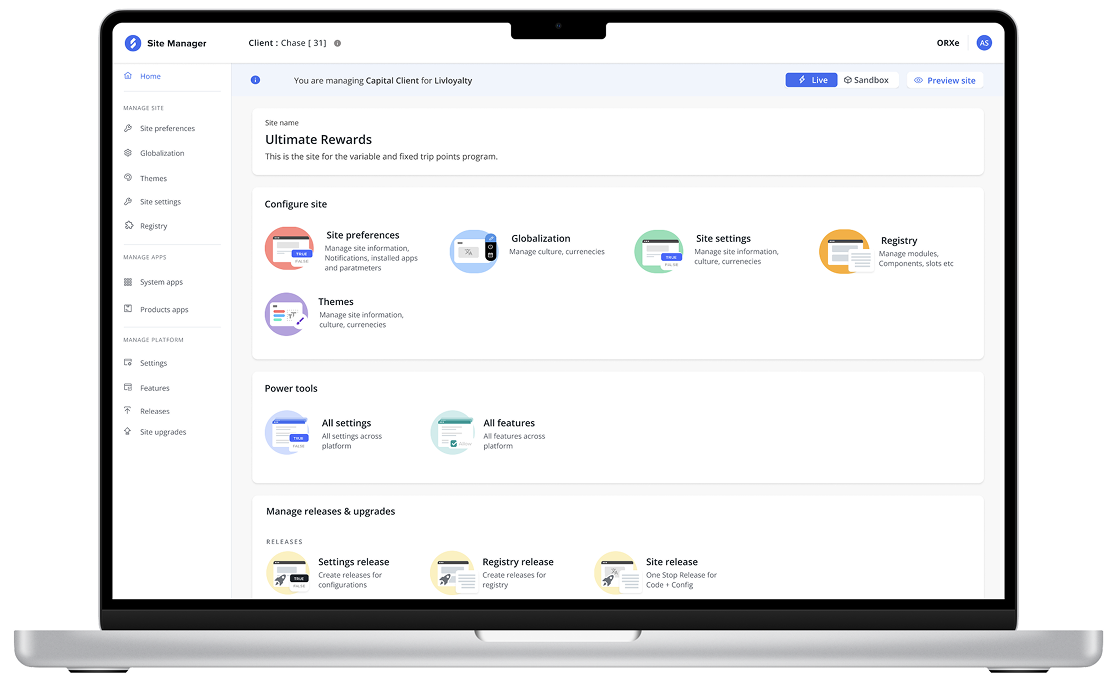
About Site Manager
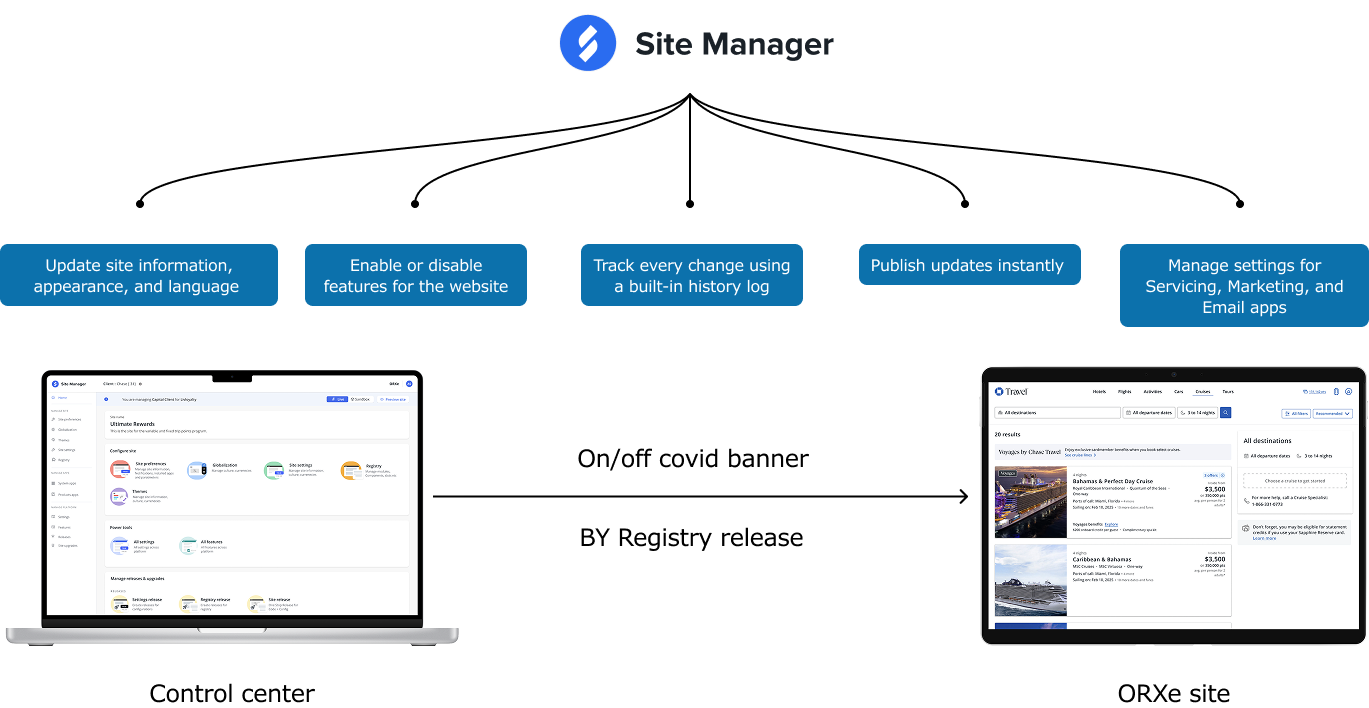
Long story short
I led the vision for a new way to help engineering teams manage shared registries with clarity and control.
I partnered with Tech Architecture and Product to design a solution that reduces ownership confusion, improves traceability, and prevents uncontrolled deployments. Key accomplishments included:
01. Design
Owned the design for a new “Module Release” feature that separates registries by app/module, enabling teams to release independently—with override support when needed.
02 Collaboration
Collaborated regularly with Product and Tech to shape requirements, align stakeholders, and define sprint goals supporting the product roadmap.
How might we help multiple teams use a shared registry with clear ownership, auditable change tracking, and controlled deployments?
Speaking to users (SiteManager)
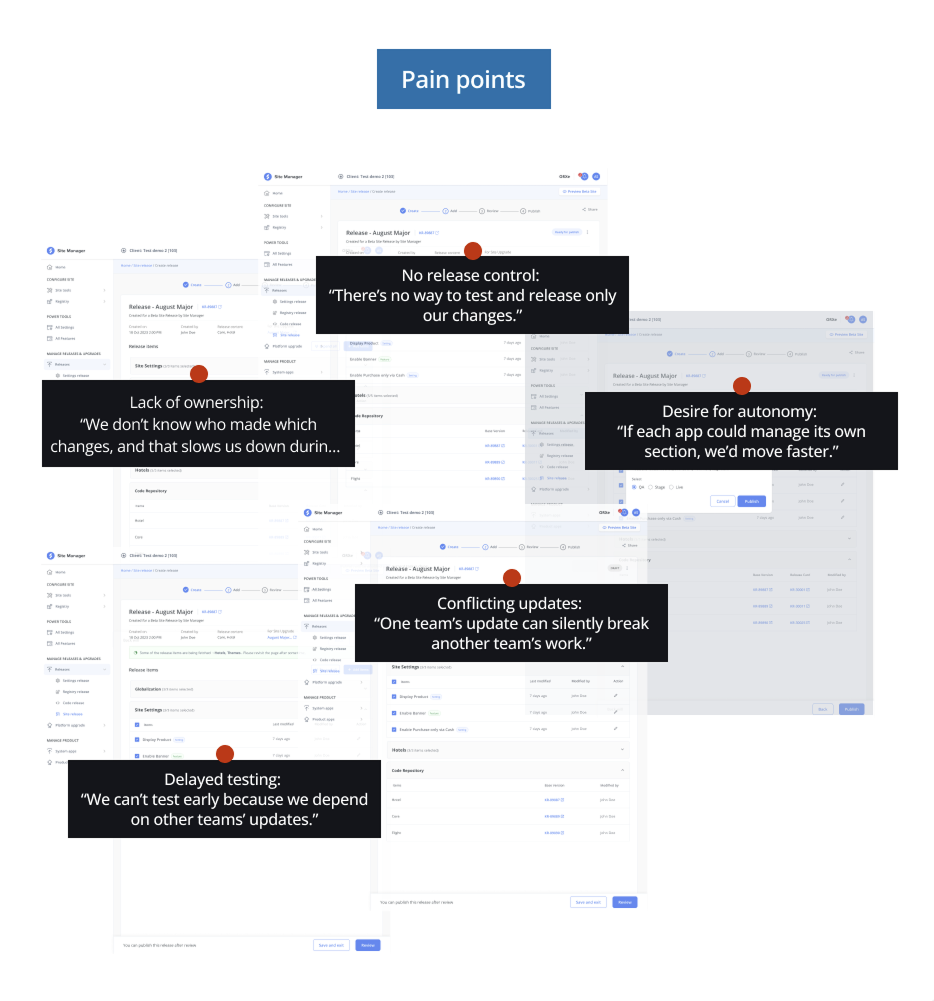
I went out and interviewed 6 SiteManager users across multiple teams to understand what breaks when everyone ships through a shared registry.
I spoke with engineers, release owners, and platform stakeholders to capture real workflows (not the documented ones). Across interviews, one theme was consistent: shared registry ownership is unclear, changes are hard to trace, and releases feel risky.
Interview Questions:
Walk me through how you publish a change to the registry in SiteManager.
How do you know who owns a module or section of the registry?
Where do you look to understand what changed and why?
How do you test and release only your changes today?
What happens when two teams make updates that conflict?
Tell me about a recent incident caused by a shared registry update—how was it triaged and resolved?
If you had full control over your module’s release process, what would “ideal” look like?
Opportunities
I guided my team to four main feature areas for the MVP
Based on user research and recurring pain points, we focused the MVP on ownership clarity, traceability, and safe, independent releases.
01. Module-Based Registry (Segmentation)
02. Ownership & Access Controls
03. Audit Trail & Change Tracking
04. Release Controls (Module Release)
User flow
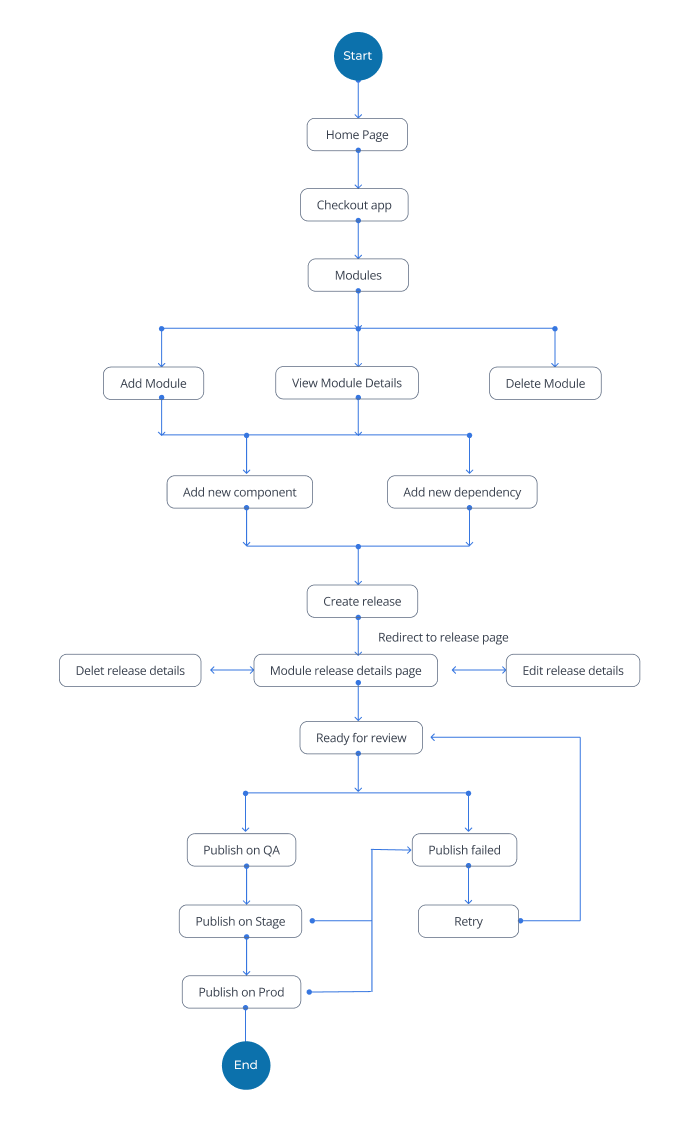
Defining the feature concept
I brainstormed three key features to address the main pain points from research—clear ownership, change visibility, and controlled releases.
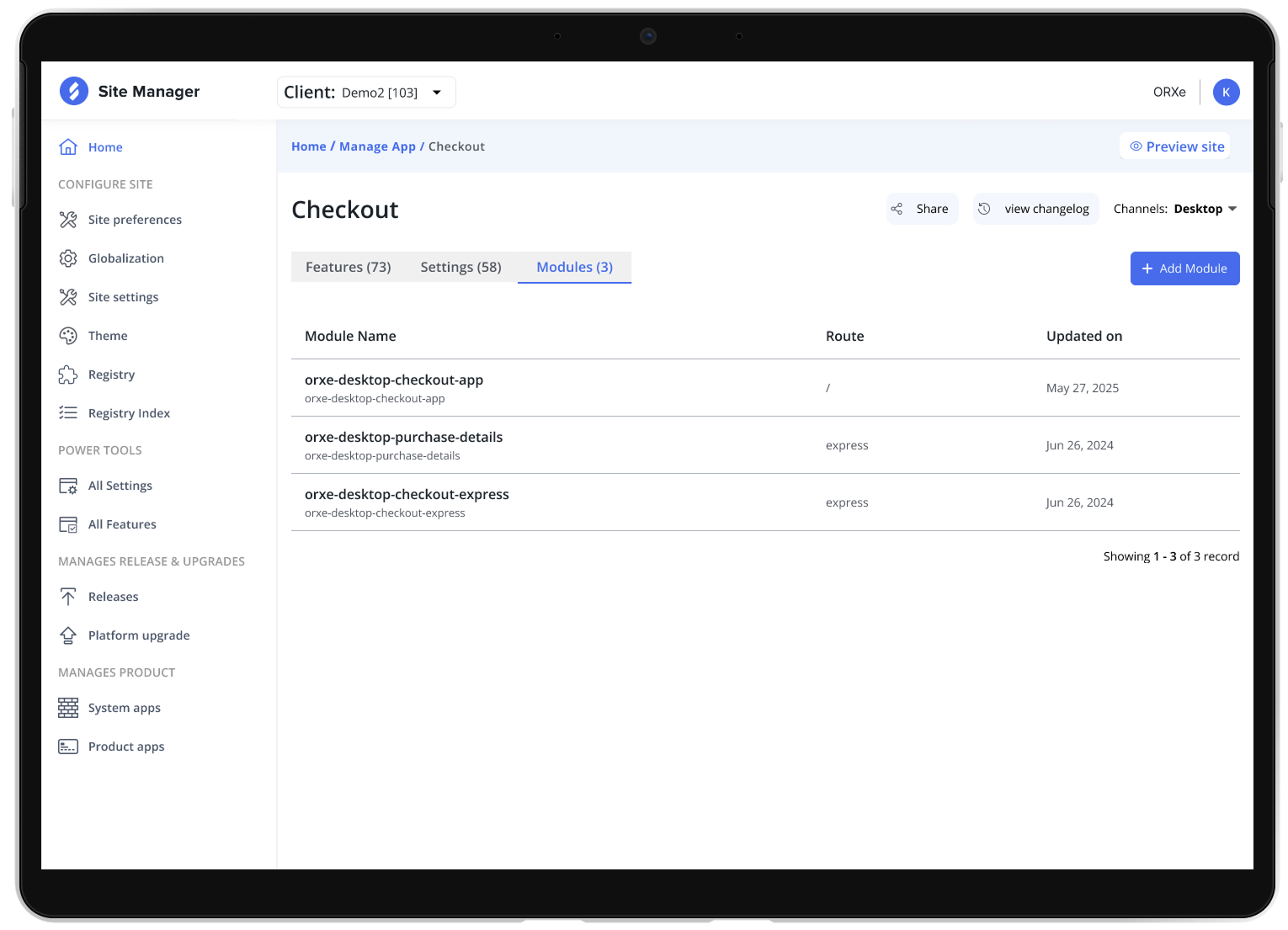
01. Module Widget (in-app)
Teams can add multiple modules within an app, edit/delete modules, and view a change log to track updates over time.
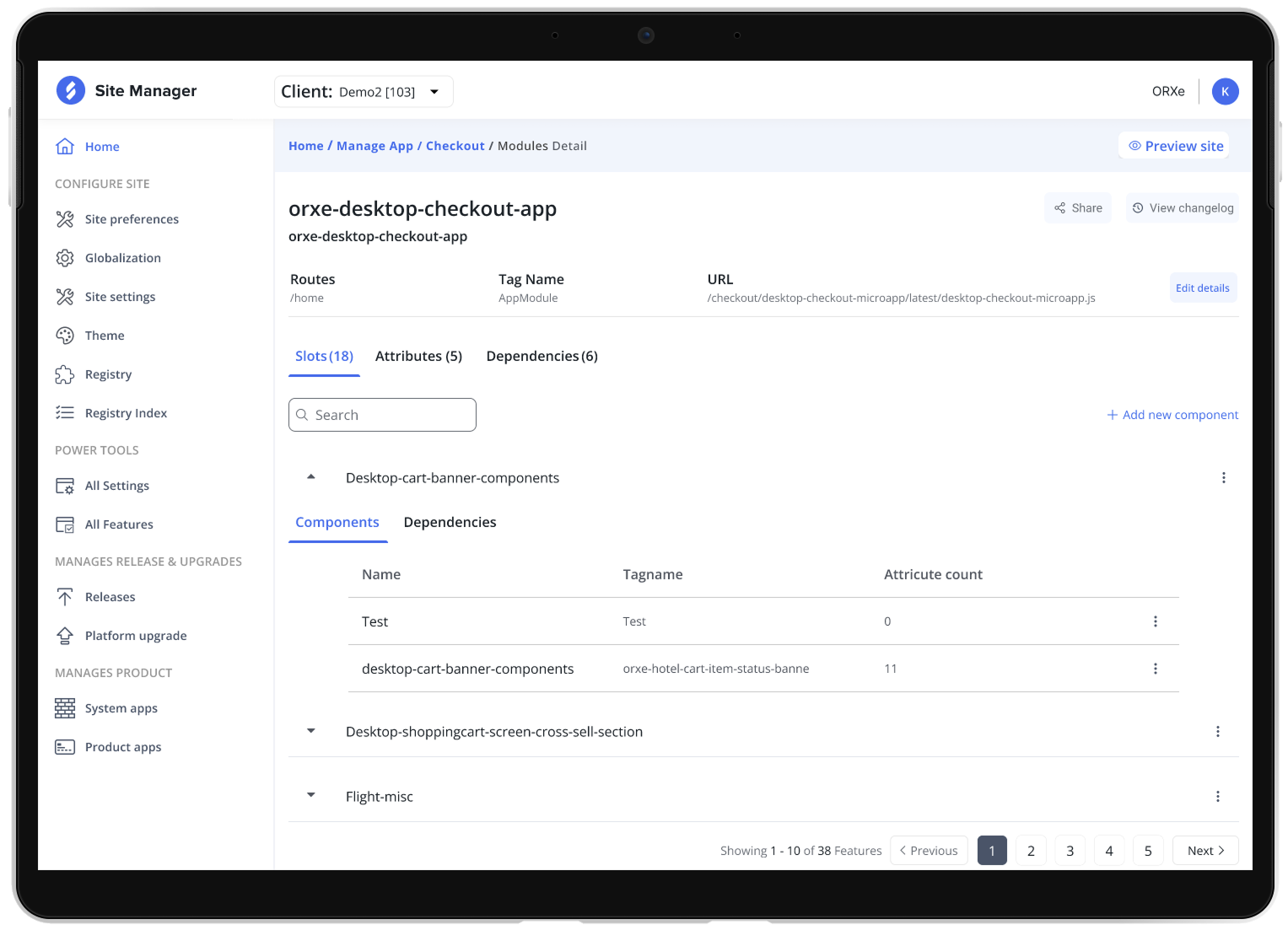
02. Create Release
Users can select components for a specific app/module and create a release—so teams can ship updates intentionally instead of bundling changes.
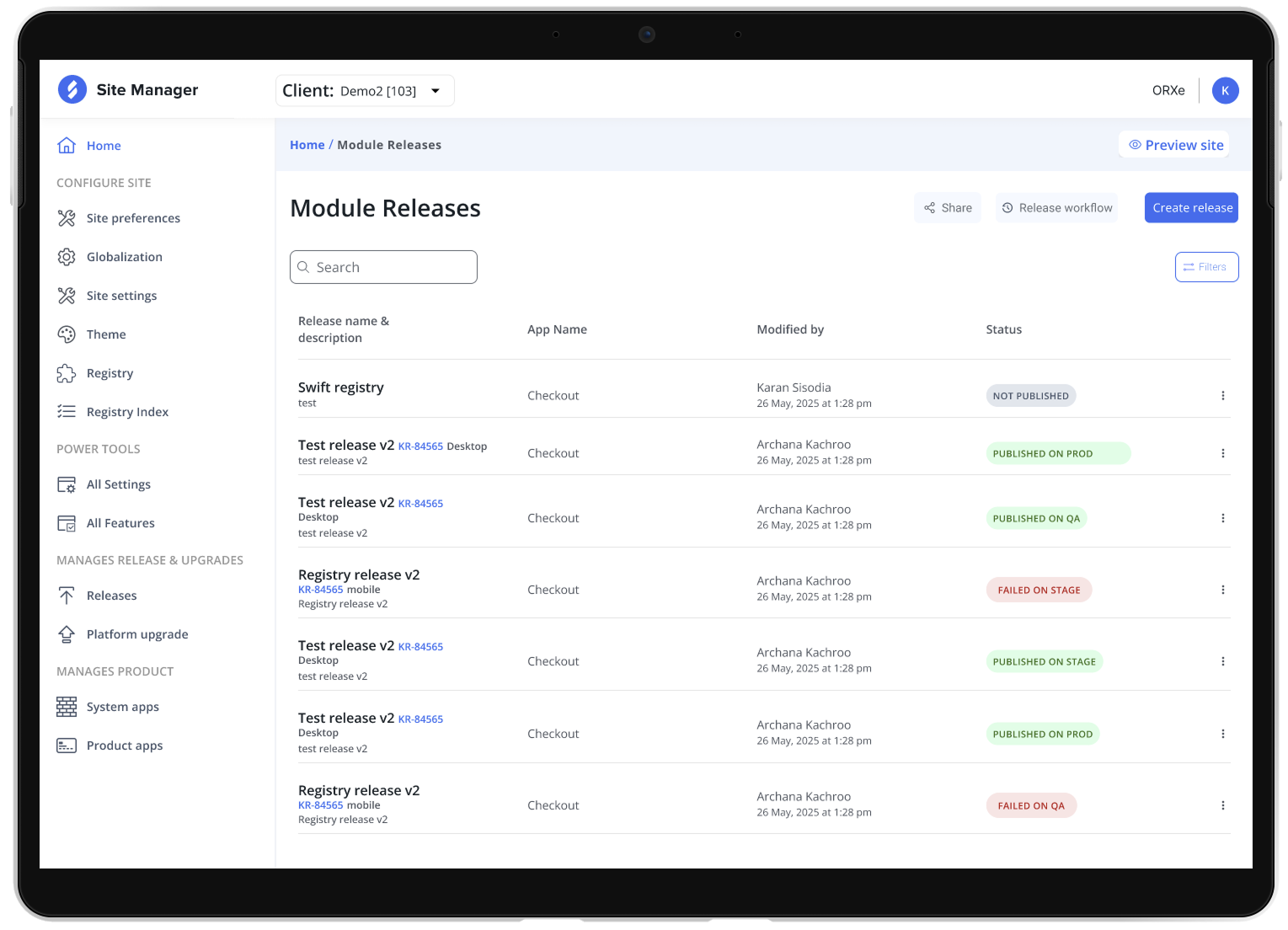
03. Module Release Page
A dedicated page to manage module releases end-to-end: review changes, confirm ownership, and control when/what gets deployed.
Final Design
Key Takeaways
Success Metrics (New Design)
Metric
Registry releases per month
Conflict rate in registry releases
Automated rollback in QA/Stage
Before (Old Registry)
3 - 4
~7 out of 10
Not available
After (Module Release)
8 - 10
~1–2 out of 10
100% rollback capability
Qualitative Usability Test Metrics
User satisfaction score
Task completion rate
Positive feedback
4/5
95%
8/10